 How-to
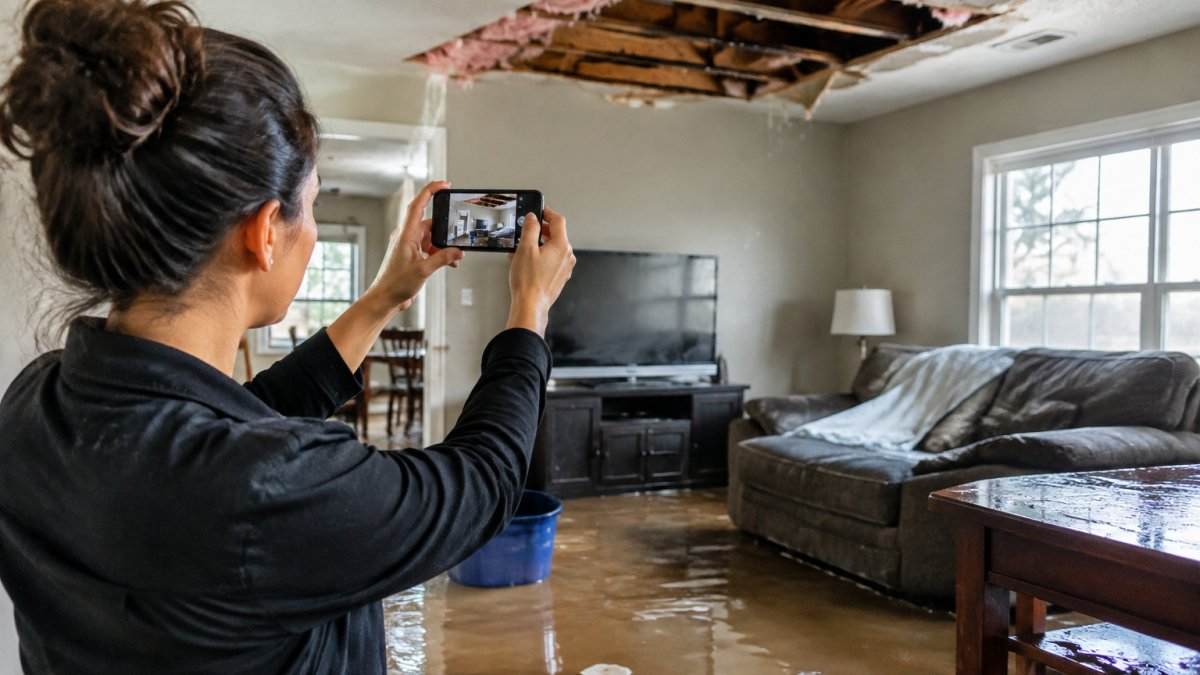
5 Steps to Handle a Property Damage Claim Right
Quick Summary
Handle property damage claims by reporting the loss promptly, preventing further damage, documenting everything with photos and receipts, and reviewing the insurer's estimate against your own evidence before accepting any settlement. Know your policy's exclusions, deductible, and deadlines, because these decide most outcomes.
- Report the loss to your insurer as soon as it is safe, and log the claim number and every call.
- Your policy almost always requires you to prevent further damage, and emergency repairs should be receipted.
- Photograph and video the damage before moving anything, and build an itemized inventory with receipts.
- Compare the insurer's line-item estimate against your contractor bids before accepting any offer.
- Do not sign a full and final settlement until you have checked it against your documented loss.
Table of Contents
- What a Property Damage Claim Is and How Your Policy Applies
- Step 1: Notify Your Insurer and Track Your Claim Deadlines
- Step 2: Prevent Further Damage and Make Emergency Repairs
- Step 3: Document the Damage With Photos, Video, and Receipts
- Step 4: Work With the Adjuster and Watch What You Say
- Step 5: Review the Estimate, Calculate Your Losses, and Respond to Offers
- Your Next Step If the Claim Is Denied or Underpaid
- Frequently Asked Questions
What a Property Damage Claim Is and How Your Policy Applies
Last Updated: November 5, 2026
A property damage claim is a request to your insurance company to pay for repairs or replacement after your home, car, or other property is damaged, and understanding how property damage claims work before you file can save you time and money.
Property damage claims are governed by the terms of your policy, and those terms vary by insurer and by state. Your policy is the contract.
Coverage, Exclusions, Deductibles, and Limits
Four terms decide most claims:
- Coverage: The types of loss the policy pays for, such as fire, wind, or theft.
- Exclusions: Losses the policy specifically does not pay for, like flood damage under most standard homeowners policies or wear and tear.
- Deductible: The amount you pay out of pocket before the insurer pays. A $1,000 deductible on a $6,000 repair means the insurer pays $5,000.
Watch for valuation method too. A policy paying actual cash value subtracts depreciation, while one paying replacement cost usually pays the full price of new materials, sometimes only after you actually replace the item.
Watch out: Many people assume a claim will be paid in full because the damage is real. Check the exclusions first. Damage the policy does not cover can still be real, and the denial letter will cite the exact exclusion.
Step 1: Notify Your Insurer and Track Your Claim Deadlines
Report the loss to your insurer as soon as it is safe to do so. Most policies require prompt notice, and a late report can weaken your claim.
Have these details ready when you call:
- Your policy number and the date of loss
- A short description of what happened and what was damaged
- Names of anyone else involved, such as another driver or a neighbor
Write down the claim number, the adjuster's name, and the date of your call. Keep a simple log of every conversation.
Track deadlines carefully. Your policy sets time limits for reporting a loss and for filing proof of loss.
Step 2: Prevent Further Damage and Make Emergency Repairs
Your policy almost always requires you to protect the property from more harm. This is called mitigation. If you let a leaking roof soak the attic for three weeks, the insurer may refuse to pay for the extra damage.
Common mitigation steps include:
- Shutting off water, gas, or electricity where it is safe to do so
- Covering broken windows or roof openings with tarps or boards
- Moving undamaged belongings out of the way
Keep receipts for every emergency repair and every item you buy to limit damage. These costs are often reimbursable. Do not begin permanent repairs until the adjuster has seen the damage, unless delaying would cause more harm.
Step 3: Document the Damage With Photos, Video, and Receipts
Documentation is the strongest tool you have. Insurers pay based on evidence, and a clear record makes it harder to undervalue your loss.
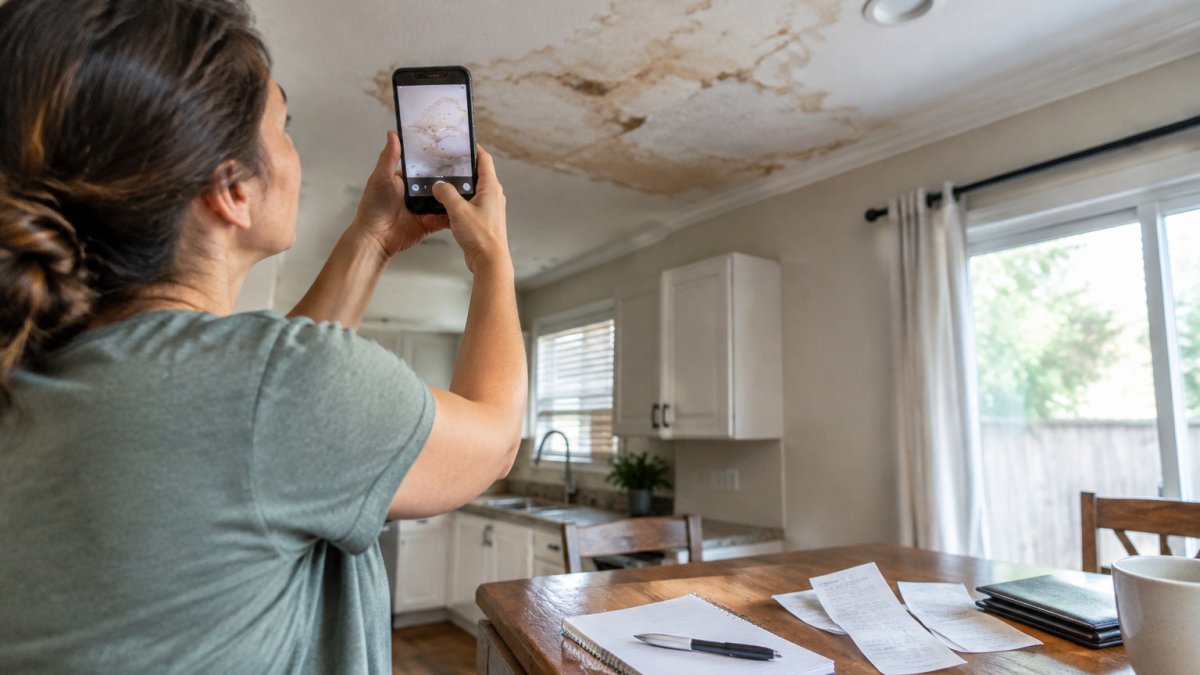
Take photos and video before you move or throw anything away. Shoot wide angles to show the room, then close-ups of each damaged item.
Build an inventory of damaged or destroyed items:
- Item description and brand
- Age and approximate purchase date
- Original price and where you bought it
Gather receipts, bank or card statements, warranties, appraisals, and old photos that show the item.
Step 4: Work With the Adjuster and Watch What You Say
The adjuster works for the insurance company. Learn how to handle insurance adjusters carefully after an accident before your first interview.
Be accurate and avoid guessing. Do not estimate values you have not verified, and do not describe damage as worse or better than it is.
Be careful about recorded statements and early settlement offers. You are not required to accept a quick payment before you understand the full damage.
Use a simple communication log with these columns:
| Date | Contact Name | Method | Summary | Follow-Up Needed |
|---|---|---|---|---|
| Nov 5 | Adjuster Lee | Phone | Confirmed inspection date | Send photos |
Step 5: Review the Estimate, Calculate Your Losses, and Respond to Offers
The insurer's estimate is a starting point, not the final word. To challenge it effectively, you need to understand how it was built. Most property estimates use industry-standard line-item software that prices labor, materials, and equipment by trade and by region. Each line has a quantity, a unit price, and often a markup for overhead and profit. When a payment looks low, the cause is usually a missing line item, a wrong quantity, a lower labor rate, or depreciation, not a single wrong total.
Read the estimate like an adjuster
Request the full line-item estimate, not just the summary page. Then compare it against your own contractor bids using the same categories:
- Scope: Did the adjuster include every damaged area your contractor identified? Look for missing rooms, missed square footage, and omitted trades such as drywall, paint, flooring, or electrical.
- Quantities: Check that measurements match. A roof measured at 22 squares when your contractor measured 28 squares is a concrete dispute you can document.
- Labor rates and overhead: Regional labor rates vary, and general contractor overhead and profit is sometimes omitted on larger, multi-trade losses. Ask whether it was applied and why.
Understand actual cash value versus replacement cost
This is where most settlement confusion starts. Under actual cash value (ACV), the insurer pays replacement cost minus depreciation, the loss in value from age and wear. Under replacement cost value (RCV), the insurer pays the cost to replace with new materials of similar kind and quality, usually up to policy limits.
Many replacement-cost policies pay in two stages: an initial ACV payment, then a recoverable depreciation payment after you complete the repairs and submit proof, such as invoices and receipts. That holdback is not a denial, it is a second check you must claim. Ask the adjuster in writing for the recoverable depreciation amount, the deadline to claim it, and exactly what documentation they need.
Calculate your documented loss
Build your own worksheet so you can compare numbers side by side:
- Repair or replacement cost from your contractor bids, by trade
- Emergency and mitigation expenses, with receipts
- Replacement value of destroyed personal property, itemized
- Additional living expenses if your home is unlivable, with receipts
- Ordinance or law or code-upgrade costs, if covered
Then apply the policy mechanics: subtract your deductible, apply any category or sublimit, and separate the ACV payment from the recoverable depreciation holdback. A simple check:
Covered loss − deductible = expected payment (before any depreciation holdback)
If the offer is lower than your documented numbers, respond in writing. Identify each disputed line item, state the amount you believe is correct, attach your evidence (contractor bid, photos, receipts, measurements), and request a reinspection or a written explanation. Ask for the specific policy language that supports each reduction. Keep the response factual and itemized; a line-by-line letter is far more effective than a general complaint.
Use the appraisal clause when the dispute is about amount
Many policies include an appraisal clause for disputes over the amount of loss. Read your policy's appraisal language before invoking it, and check your state's rules, since some states regulate appraisal and the timelines involved.
state insurance department complaint and consumer resources
Watch out: Do not cash a check marked "full and final settlement" or sign a release until you have compared it against your documented loss, because accepting it can end your right to recover the difference.
Your Next Step If the Claim Is Denied or Underpaid
A denial or low offer does not always mean the end of your claim. The right next step depends on why the claim was reduced. A coverage denial says the loss is not covered, for example, an exclusion for flood, wear and tear, or an intentional act. A valuation dispute says the loss is covered but the amount is wrong.
Build the written record first
Before you appeal, assemble the file:
- The denial or reduction letter and the exact policy sections it cites
- Your full line-item estimate and contractor bids
- Photos, video, inventory, and receipts
If the letter does not cite specific policy language, ask in writing for the basis of the decision. Check your state insurance department's rules on written explanations for denials.
File a written appeal with the insurer
Send a written appeal that separates coverage arguments from amount arguments. For a coverage dispute, quote the insuring clause and explain why the loss fits it, then address any exclusion the insurer cited. For an amount dispute, itemize each line you contest and attach the evidence. Request a reinspection and a response deadline. Keep copies of everything and send the appeal by a method that creates proof of delivery.
Escalate to the state insurance department
If the insurer will not budge, you can file a complaint with your state insurance department. Most departments accept complaints online and forward them to the insurer, which must respond in writing. This is often free and can move a stalled claim. Keep your complaint factual and attach the same documentation. Note that these departments generally do not award damages or decide your claim for you.
Know your bad-faith and legal options
States set their own rules on unfair claim settlement practices, and the availability of a bad-faith claim depends on where you live. The standards and remedies vary widely by state, so the specific conduct that qualifies depends on where you live. A demand letter from an attorney is often the point at which a stalled claim gets a fresh review.
Consider a public adjuster or attorney
A licensed public adjuster represents you, not the insurer, and is typically paid a percentage of the settlement, which is regulated in many states. An attorney is usually the better fit when coverage is disputed, bad faith is suspected, or the amount is large.
find your state insurance department
Watch out: Do not let a denial sit while you gather opinions, because policy proof-of-loss deadlines and state suit deadlines keep running even while you negotiate.
Frequently Asked Questions
How do I settle a property damage claim?
Settling a property damage claim starts with a documented loss and a clear estimate. Notify your insurer promptly, keep repair receipts, and compare the insurer's estimate against independent contractor bids. If the settlement offer is lower than the documented cost of repair or replacement, respond in writing with your evidence and request a reinspection. Many policies also include an appraisal process for valuation disputes, and your policy language will tell you whether it applies. For disputes involving significant amounts, a licensed attorney can review the policy and the offer.
What should I avoid saying to an insurance adjuster?
Avoid guessing about causes, estimating repair costs out loud, or describing damage as minor before a full inspection. Do not sign a release or accept a final payment until you understand what it covers. Stick to facts you can document, such as when the damage was discovered and what you observed, and say you will follow up in writing if you are unsure. Keeping a log of every call, with dates, names, and claim numbers, protects you if the file is later disputed.
How long does a property damage insurance claim take?
Timelines vary by insurer, damage type, and whether the loss is disputed. Simple claims may settle within a few weeks, while claims involving structural damage, multiple contractors, or a denial can take several months. Your state's insurance department publishes rules on prompt claim handling, and your policy sets filing deadlines you must meet. Check your state's official insurance regulator website for the rules that apply to your claim.
Can I sue someone for property damage in a car accident?
Yes. If another driver caused the accident, you may pursue their liability insurer for vehicle and property losses, or file a civil lawsuit in the appropriate court if the claim cannot be resolved. Limits on how much you can recover depend on the at-fault party's policy limits and on the negligence and filing rules of the state where the accident occurred. Document the damage thoroughly, get a police report, and consult an attorney before accepting a settlement, especially if injuries are involved.