 How-to
Can You Get Medical Care Without Health Insurance?
Last Updated: November 8, 2026
Quick Summary
Yes, you can get medical care without health insurance through emergency rooms, urgent care, community health centers, and free or charitable clinics. Many of these offer sliding-scale fees or no-cost visits to eligible patients. Hospitals also provide financial assistance programs that can reduce or erase bills for lower-income patients.
- Emergency departments must evaluate and stabilize anyone who arrives, regardless of ability to pay.
- Community health centers typically charge on a sliding scale tied to the Federal Poverty Level.
- Ask urgent care for the self-pay price and a written estimate before any treatment begins.
- Gather proof of income, residence and identity before applying for hospital financial assistance.
- Do not ignore collection notices while a financial assistance application is pending.
Table of Contents
- Where Can I Go for Medical Care Without Insurance?
- Step 1: Decide How Urgent Your Care Is
- Step 2: Find Free Clinics Near Me With No Insurance
- Step 3: Check Community Health Centers and Sliding-Scale Fees
- Step 4: Understand Urgent Care Without Insurance Cost
- Step 5: How to See a Doctor Without Insurance and No Money
- Booking Your First Visit and Bill Protections to Ask For
- Frequently Asked Questions
Yes, you can get medical care without health insurance, and you have more options than many people expect. The first step is knowing where care is available. Many clinics, health centers and hospitals offer care on a sliding scale or at no charge to people who qualify. This guide walks through the steps to get treatment safely while you sort out the cost.
Where Can I Go for Medical Care Without Insurance?
Several types of providers see patients who have no insurance. Each one fits a different level of need, so the right choice depends on how serious your condition is.
- Emergency room: Emergency departments are generally required to evaluate and stabilize anyone who arrives, regardless of ability to pay.
- Urgent care: Handles non-life-threatening problems like minor fractures, infections and cuts.
- Community health centers: Federally qualified health centers that charge on a sliding scale based on income.
A common approach is to start with a community health center or free clinic for ongoing care, and reserve the emergency room for true emergencies.
Step 1: Decide How Urgent Your Care Is
Before you choose a provider, decide how quickly you need to be seen. Your answer determines where you should go.
Ask yourself these questions:
- Is the problem life-threatening?
- Is it getting worse quickly?
- Can it safely wait a few days for a routine visit?
If the answer to the first question is yes, call 911 or go to the nearest emergency room right away. Otherwise, match the problem to the right setting.
Symptoms That Need the Emergency Room Now
Go to the emergency room without delay if you have:
- Chest pain or pressure
- Trouble breathing
- Signs of stroke, such as facial droop, arm weakness or slurred speech
Watch out: Do not wait to see if symptoms improve after a crash. Some serious injuries, like internal bleeding, do not show obvious signs right away.
Step 2: Find Free Clinics Near Me With No Insurance
Free clinics are one of the best options if you have no insurance and little money.
When you call or visit, ask:
- Do you accept patients without insurance?
- What documents do I need to bring?
- Is there a fee, and is it based on income?
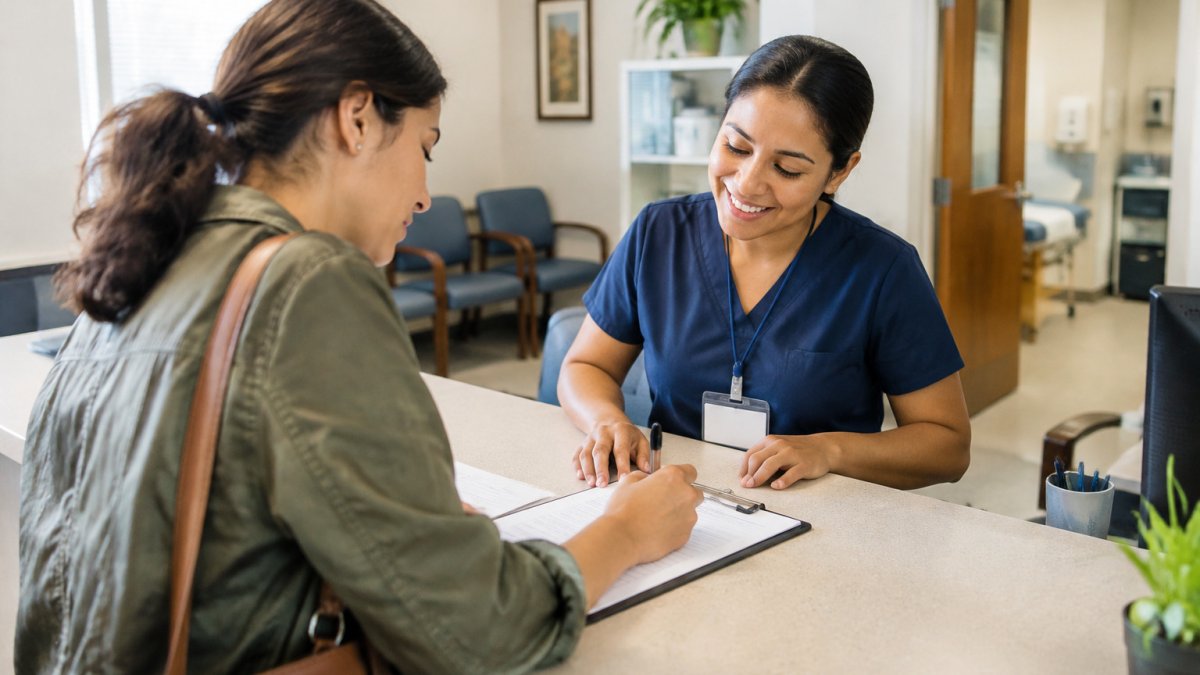
Most free clinics ask for proof of income and identity. Bring recent pay stubs, a tax return or a letter stating you have no income, plus a photo ID.
Step 3: Check Community Health Centers and Sliding-Scale Fees
Sliding-scale arrangements vary by center. Fees generally rise as household income rises, and some centers offer free or very low-cost visits to the lowest-income patients.
You can learn current income thresholds from the U.S. Department of Health and Human Services at HHS Poverty Guidelines.
Health centers also offer primary care, dental care, vision care and prescription help, so one visit can cover several needs.
Step 4: Understand Urgent Care Without Insurance Cost
Urgent care is faster and cheaper than the emergency room, but it is not free. Walk-in clinics often charge a self-pay rate for a basic visit, and extra fees may apply for X-rays, lab tests and stitches. The key to controlling the bill is to get the price in writing before anyone treats you.
How Self-Pay Pricing Actually Works
When you tell the front desk you are paying cash, you are asking for the self-pay rate. That rate is set by the clinic, not by a government schedule, so it varies from one walk-in center to the next. Self-pay rates are sometimes lower than the rates billed to insurers, though this varies by clinic.
A basic visit rate typically covers only the evaluation and the clinician's time. It usually does not cover:
- X-rays and other imaging
- Lab tests, including rapid strep, flu or urine tests
- Stitches, splints, and other supplies
Ask for each of these separately before you agree to treatment.
Get a Written Estimate Before Treatment
Before you sign in, ask the front desk for a written estimate of the total cost. A useful estimate should list:
- The base visit fee
- Each anticipated test or procedure and its price
- Any facility fee, which some clinics charge separately from the clinician fee
Clinics often cannot guarantee a final price, because the clinician may order something unexpected. Ask what happens if the final bill exceeds the estimate, and whether you can be notified before any add-on charge is incurred.
Watch out: A quoted "visit fee" can be only part of the bill. Ask directly whether the clinic charges a separate facility fee on top of the clinician fee, because that is the most common reason a self-pay bill comes in higher than the number quoted at the desk.
Ask for a Self-Pay Discount and a Payment Plan
Once you have the estimate, ask two questions:
- Is there a discount for paying in full at the time of service?
- If I cannot pay in full, what payment plan do you offer?
Some urgent care centers may reduce the balance for same-day payment, and some offer installment plans if you ask before the visit rather than after the bill goes to collections. Get the payment plan terms in writing, including the monthly amount and the number of months.
Compare the Setting Before You Go
Before you choose urgent care, confirm that it is the right setting. A community health center may charge less on a sliding scale for the same non-emergency problem, but it may not have same-day openings. Urgent care costs more per visit but is available without an appointment. If the problem can safely wait a few days, a sliding-scale primary care visit is usually the cheaper path.
Keep the Paperwork
Ask for an itemized receipt before you leave, and keep the written estimate. If the final bill does not match the estimate, you have a documented basis to ask the billing office to correct it. Request an itemized bill that lists every charge, compare it to the care you actually received, and dispute any line item you do not recognize before you pay.
Step 5: How to See a Doctor Without Insurance and No Money
If you have no money at all, you still have options. The most powerful one is the hospital financial assistance program, often called charity care. This section walks through how to use it.
Start With the Hospital's Financial Assistance Policy
Nonprofit hospitals are generally expected to maintain a written financial assistance policy under federal tax rules. You can read the underlying requirements at the IRS at IRS nonprofit hospital financial assistance requirements. The policy itself is published by each hospital, usually on its website under "billing" or "financial assistance." Ask the billing office to mail or email you a copy, and ask for the plain-language summary if one exists.
Read the policy for four things:
- The income limits for a full or partial discount, often expressed as a percentage of the Federal Poverty Guidelines
- Which services are covered and which are excluded
- The documents you must submit
Gather the Documents Before You Apply
A typical application asks for:
- Photo identification
- Proof of income for the household, such as recent pay stubs, a tax return, or a letter stating you have no income
- Proof of residence, such as a utility bill or lease
If you cannot produce a document, ask the financial counselor what alternative is accepted. Some programs accept a signed statement explaining your situation.
Submit and Track the Application
Submit the application to the hospital's financial assistance office, not to the collection agency. Ask for a written acknowledgment that the application was received, and ask whether collection activity is paused while the application is pending.
Watch out: Do not ignore collection notices while your application is pending. Call the billing office and the collection agency, tell them an application is under review, and ask for the account to be placed on hold in writing.
If You Are Denied, Appeal
A denial is not always final. Ask for the reason in writing, confirm which income figure was used, and correct any error in household size or income. Ask whether the hospital has a second-level review, and submit any missing documents with a short letter explaining the correction. If the hospital is nonprofit, you can also ask for the name of the office that oversees the financial assistance policy.
Other Paths When You Have No Money
Financial assistance is the strongest option, but it is not the only one:
- Ask the provider for a self-pay discount, which can lower the bill significantly.
- Request a written cost estimate before the visit or procedure.
- Ask for an interest-free payment plan before the bill goes to collections.
- Check whether you qualify for Medicaid, which covers some low-income adults depending on state rules. Eligibility and income limits vary by state, so apply through your state agency rather than assuming you are ineligible.
- Look for prescription assistance if medication cost is the barrier. Ask the clinic's staff about generic alternatives and manufacturer assistance programs, and ask the pharmacy about its discount program.
Some people may qualify for a special enrollment period on the Health Insurance Marketplace after a major life change, such as losing a job. You can check at HealthCare.gov marketplace enrollment.
If you are dealing with medical bills after an accident, you can learn how medical bills are handled after an injury in our guide on how to pay medical bills after an accident. For help getting medical care right after a crash, see how to get medical care after a car accident. If upfront costs are the obstacle, our article on ways accident victims pay lawyer fees without upfront costs explains options for paying for professional help.
The article lays out the main ways to reduce or avoid a bill when you have no money, in rough order of strength.
| Option | What it does | Key step |
|---|---|---|
| Hospital financial assistance | Reduces or erases bills for lower-income patients | Apply through the hospital's financial office |
| Self-pay discount | Lowers the bill for paying at the time of service | Ask the provider for the discount |
| Written cost estimate | Shows expected charges before treatment | Request it before the visit or procedure |
| Interest-free payment plan | Spreads the balance out over time | Ask before the bill goes to collections |
| Medicaid | Covers some low-income adults | Apply through your state agency |
| Prescription assistance | Lowers medication costs | Ask about generics and manufacturer programs |
Booking Your First Visit and Bill Protections to Ask For
When you book your first visit, tell the scheduler you have no insurance and ask about self-pay rates.
Before you leave, ask for these protections:
- A written estimate of the total cost
- A copy of the bill with each charge itemized
- The name of a billing contact who can answer questions
You also have the right to dispute a bill that looks wrong.
Many people feel overwhelmed by medical bills after an injury, and that is normal. The Virtual Law Group is available to answer calls on weekends, nights and holidays.
Frequently Asked Questions
Can I just go without health insurance?
Yes, you can still get medical care without health insurance. You will usually pay the cash or self-pay price, and that price is often higher than what insured patients are charged. Several options can lower the cost: free clinics, community health centers that offer sliding-scale fees based on income, and hospital financial assistance programs. Before any visit, ask the provider for a cost estimate and whether a self-pay discount applies. Keep in mind that eligibility for charity care and sliding-scale fees varies by provider and state, so confirm terms directly with the office.
Will a doctor see me without health insurance?
Many doctors will see patients without insurance, but policies differ by practice. Some private offices accept self-pay patients and offer a discounted rate if you pay at the time of service. Others do not accept uninsured patients at all. Call the office ahead of time, ask whether they see self-pay patients, and request the cash price for a standard visit. Community health centers and free clinics are designed for patients without coverage and are often the most reliable option.
What is the cheapest way to see a doctor without insurance?
For most uninsured patients, the lowest-cost option is a free clinic or a federally qualified community health center that charges on a sliding scale tied to income. Telemedicine visits and retail clinics can also be inexpensive for minor issues, and many offer posted cash prices. Avoid the emergency room for non-urgent care, since emergency visits usually cost far more. Ask for a written cost estimate before treatment, and ask whether a payment plan is available if you owe a balance afterward.
How much does urgent care cost without insurance?
Urgent care costs without insurance vary by clinic, region and the services you need. Many urgent care centers post self-pay prices for basic visits, and the total can rise quickly with tests, X-rays or medications. Ask for a cost estimate before you are seen, request the cash or self-pay rate, and ask whether the clinic offers a discount for paying at the time of service. Compare the estimate with a community health center's sliding-scale fee before deciding where to go.