 how-to
How to Prove Negligence in Slip and Fall: A Step-by-Step Guide
Last Updated: October 23, 2026
Quick Summary
How to prove negligence in slip and fall requires establishing four legal elements: the property owner's duty of care, their breach of that duty, causation linking the breach to your fall, and documented damages. You must prove the owner knew or should have known about the hazard through actual notice or constructive notice, supported by evidence like maintenance records, witness statements, photographs, and medical documentation.
- Property owners must maintain safe premises and warn of known hazards; invitees receive higher protection than trespassers.
- Collect photographs, witness contact information, and incident reports within 24 hours before evidence disappears.
- Security footage typically overwrites every 30-90 days, so request preservation in writing immediately after your fall.
- Prove the owner's knowledge through maintenance records, inspection logs, prior complaints, or evidence the hazard was obvious.
- Document all damages with medical bills, treatment records, pay stubs for lost wages, and receipts for ongoing expenses.
Table of Contents
- The Four Elements of Negligence You Must Prove
- How to Prove a Property Owner Knew About a Hazard
- Collecting Slip and Fall Evidence at the Scene
- Using Slip and Fall Witness Statements to Build Your Case
- Obtaining and Preserving Slip and Fall Surveillance Footage
- Medical Records and Documentation of Damages
- Common Defense Arguments and How Evidence Addresses Them
- Frequently Asked Questions
The Four Elements of Negligence You Must Prove
How to prove negligence in slip and fall cases requires establishing four legal elements, each proven separately, without even one, your case will fail.
Element 1: Duty of Care
A property owner has a legal duty to keep premises reasonably safe and warn visitors of known dangers.
The duty of care applies to:
- Fixing hazards like broken stairs or loose handrails
- Cleaning up spills and debris promptly
- Inspecting the property regularly for dangers
Different visitors receive different protection: invitees (people invited onto the property) get the highest level of care, more than trespassers.
Element 2: Breach of Duty
A breach occurs when the owner fails to meet that duty, by not maintaining the property or not warning about a known hazard.
Examples of breach include:
- Leaving a spill on the floor for hours without cleaning it
- Failing to fix a broken step for weeks or months
- Not warning customers about a wet floor
The key question: did the owner act reasonably? A reasonable person would clean up a spill quickly and fix a broken handrail. If the owner didn't, they breached their duty.
Element 3: Causation
Causation means the owner's breach directly caused your fall and injury, in two parts: actual and proximate cause.
Actual cause asks: but for the owner's breach, would you have fallen? If the spill wouldn't have existed without the owner's failure to clean it, that's actual cause.
Proximate cause asks if the injury was a foreseeable result of the breach. If someone leaves a wet floor unattended, it's foreseeable that someone will slip, fall, and break a leg.
Both must exist for your claim to succeed.
Element 4: Damages
Damages are the actual losses you suffered because of the fall, including:
- Medical bills and treatment costs
- Lost wages from missing work
- Pain and suffering
You must prove the actual dollar amount of your damages with medical records, bills, and pay stubs. Without documented damages, you have no claim worth pursuing.
How to Prove a Property Owner Knew About a Hazard
The owner's knowledge of the hazard is critical: if they didn't know about the danger, they can't be liable. The law recognizes actual notice and constructive notice.
Actual Notice vs. Constructive Notice
Actual notice means the owner knew about the hazard directly, a customer reported the spill, an employee saw the broken step, or the owner was present when it was created.
Constructive notice means the owner should have known about the hazard through reasonable inspection. Even if nobody told them, the owner had a duty to inspect regularly; if a reasonable inspection would have found it, the owner is liable.
Constructive notice applies when:
- A hazard has existed long enough that a reasonable inspection would find it
- The owner failed to perform routine maintenance or inspections
- The condition is obvious enough that any reasonable person would see it
Documentation That Shows Knowledge
Proving knowledge requires evidence. Collect and preserve:
Maintenance records that show the owner knew about similar problems before
- Repair logs for the same area
- Inspection reports documenting the hazard
- Work orders issued but never completed
Employee statements from staff who worked in the area
- Statements that they saw the hazard
- Testimony about how long the condition existed
- Records of complaints made to management
Prior incidents in the same location
- Reports of other falls in the same spot
- Complaints from other customers
- Insurance claims for similar accidents
Inspection logs that show the owner's routine maintenance schedule
- Records showing when inspections should have occurred
- Proof that inspections were skipped or incomplete
- Documentation of what the owner should have found
These documents prove either actual knowledge (someone knew) or constructive knowledge (someone should have known through reasonable inspection).
Collecting Slip and Fall Evidence at the Scene
The moments after your fall are critical: the evidence you collect becomes the foundation of your case.
Immediate Documentation Steps
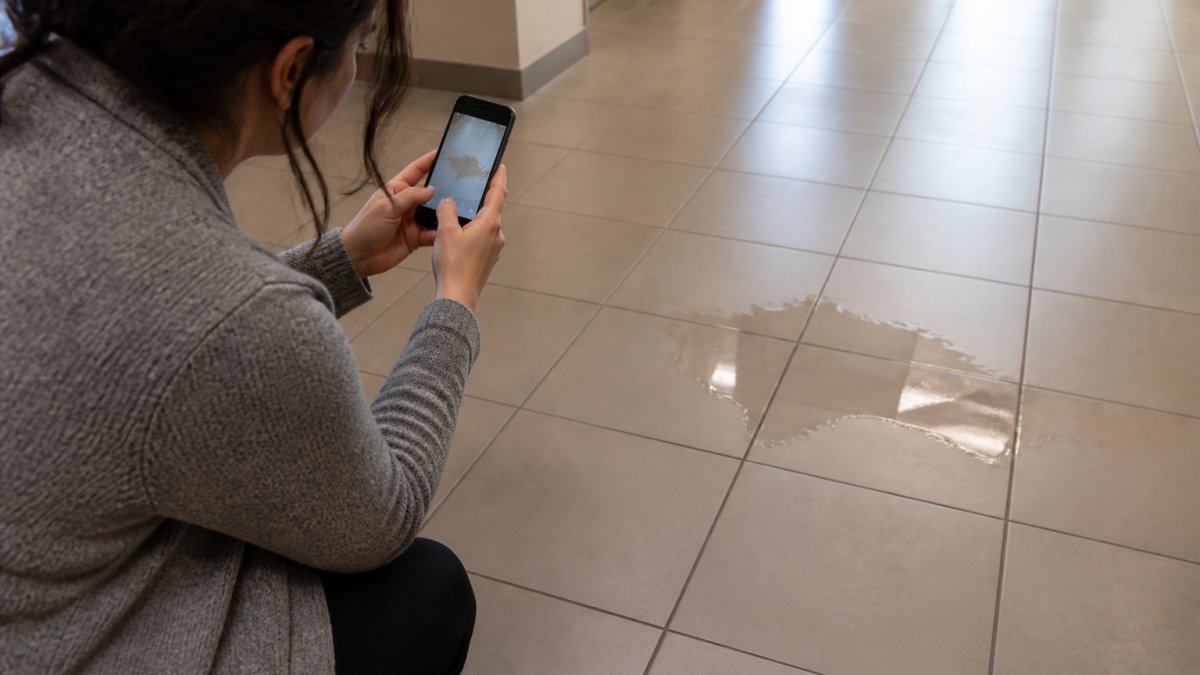
Take photographs of everything while the scene is unchanged:
- The exact spot where you fell, showing the hazard clearly
- The hazard itself (wet floor, debris, broken step) from multiple angles
- The surrounding area to show context
Write down what happened immediately: the exact time and date, weather if outdoors, how the hazard was created, how long it likely existed, and who witnessed it.
Get witness contact information: names, phone numbers, what they saw, and whether they'd provide a statement later.
Report the incident to the property owner or manager:
- Request a written incident report
- Ask for a copy of any security footage
- Document who you spoke with and when
| Evidence Type | What to Collect | Why It Matters |
|---|---|---|
| Photographs | Hazard from multiple angles, lighting, surroundings | Visual proof of the dangerous condition |
| Written statement | Your account of what happened, timing, witnesses | Your contemporaneous account of facts |
| Witness contact info | Names, phone numbers, what they saw | Independent corroboration of your version |
| Incident report | Written report from property owner | Documents the owner's awareness of the accident |
| Medical records | Treatment dates, diagnoses, provider notes | Proves causation between fall and injury |
Evidence Preservation Timeline
Evidence disappears fast. Follow this timeline:
Within 24 hours:
- Photograph the scene again if possible (hazards change quickly)
- Write detailed notes while memory is fresh
- Contact witnesses and request statements
Within 1 week:
- Send a written request to the property owner for the incident report
- Request security footage preservation (many systems overwrite after 30 days)
- Collect medical bills and treatment records
Within 30 days:
- Follow up on security footage requests
- Obtain complete medical records from all providers
- Gather maintenance records and inspection logs if available
Within 90 days:
- Interview witnesses formally and get written statements
- Obtain expert opinions if needed (engineer, safety expert)
- Compile all medical documentation
Using Slip and Fall Witness Statements to Build Your Case
Witnesses are powerful: they saw what happened, have no stake in the outcome, and their account carries weight your own statement cannot.
How to Obtain and Document Witness Accounts
Approach witnesses at the scene immediately: thank them, ask if they'd provide a statement, get their full contact information, and ask them to write down what they saw while it's fresh.
Follow up within a few days: call with detailed questions, request a formal written statement, ask if they'd testify, and keep the statement safe.
Good witness statements include:
- The date, time, and location of the fall
- What hazard caused the fall (spill, broken surface, debris)
- How long the hazard appeared to exist before the fall
Document the witness's credibility:
- Their name, address, phone number, and email
- Their occupation and relationship to the property
- Whether they work at the location or were a customer
Multiple witnesses strengthen your case significantly. Even if each witness only saw part of what happened, together they paint a complete picture.
Obtaining and Preserving Slip and Fall Surveillance Footage
Security cameras often capture the fall and the conditions leading up to it. This video evidence is invaluable but disappears quickly if you don't act.
How to Request Security Footage Legally
Send a written request to the property owner immediately:
- Specify the exact date, time, and location of the fall
- Request all video from at least 30 minutes before the fall through 30 minutes after
- Ask for video in a common format (MP4, AVI)
Keep a copy of your request:
- Send it by email or certified mail
- Document that you sent it and when
- This creates a record that you requested preservation
The property owner is legally required to preserve evidence once they know a claim might result. Your written request puts them on notice.
Retention and Storage Limitations
Most security systems overwrite footage every 30-90 days, so waiting too long may mean it's already gone.
Act fast:
- Request footage within days of the fall, not weeks
- Follow up immediately if the owner doesn't respond
- If the owner refuses to provide footage, document this refusal in writing
Store the footage safely once you have it:
- Save it to multiple devices or cloud storage
- Keep the original file in its native format
- Create backup copies
If the footage is missing or destroyed, the timing matters. If the owner destroyed it after you requested preservation, that's evidence of negligence. If it was automatically deleted before your request, that's harder to prove but still relevant.
Medical Records and Documentation of Damages
Your medical records prove two critical things: that you were injured in the fall and that the injuries are real and costly.
Collect and organize:
- Emergency room records from the day of the fall
- Diagnosis and treatment notes from all providers
- Physical therapy records if you received therapy
Document your lost income:
- Pay stubs showing lost wages
- Letters from your employer confirming time missed
- Tax returns if you're self-employed
Document ongoing expenses:
- Future medical treatment you'll need
- Medications you'll take long-term
- Home modifications required because of your injuries
Medical records establish causation and the scope of damages. The more thorough your documentation, the stronger your damages claim.
Common Defense Arguments and How Evidence Addresses Them
Property owners and their insurers will challenge your claim. Understanding their arguments helps you prepare evidence that defeats them.
Defense: "We didn't know about the hazard."
Counter with evidence of actual or constructive notice:
- Maintenance records showing similar problems
- Inspection logs that should have revealed the hazard
- Witness statements that the hazard existed for hours
Defense: "The hazard was temporary and unavoidable."
Counter by proving the owner had time to address it:
- Timeline showing how long the hazard existed
- Testimony about how quickly the owner could have fixed it
- Lack of warning signs despite the hazard being known
Defense: "You were careless and caused your own fall."
Counter with evidence that the hazard was the actual cause:
- Photographs showing how obvious the hazard was
- Medical evidence linking the fall to the specific hazard
- Witness testimony that the fall was unavoidable
Defense: "You were trespassing or not an invited guest."
Counter by proving your status as an invitee:
- Evidence you were shopping or conducting business
- Receipts or records of your presence
- Testimony that you were invited to be there
Defense: "Your damages are exaggerated."
Counter with documented medical evidence:
- Medical bills from providers (not your estimates)
- Medical records supporting the severity of injury
- Wage records showing actual lost income
Our team helps you collect, organize, and present evidence that proves negligence clearly.
Slip and fall accidents cause real injuries and financial hardship.
Evidence-gathering is time-sensitive: footage disappears, witnesses move away, memories fade.
Premises Liability Law overview provides general guidance on property owner duties.
If you've been injured in a slip and fall, book a consultation with The Virtual Law Group to discuss your case and learn how we build negligence claims. Our team is available to answer calls on weekends, nights, and holidays. Learn more about our personal injury settlement process to understand the timeline and what to expect as your case moves forward.
Frequently Asked Questions
What are the four elements you must prove to establish negligence in a slip and fall case?
You must prove: (1) the property owner owed you a duty of care, (2) they breached that duty by failing to maintain safe conditions or warn of hazards, (3) their breach directly caused your fall, and (4) you suffered damages such as medical bills, lost wages, or pain and suffering. Each element must be supported by evidence, incident reports, photographs, witness statements, medical records, and maintenance logs. Without proof of all four, negligence cannot be established.
How can you show that a property owner knew about a dangerous condition?
Property owners can have actual notice (they directly observed the hazard) or constructive notice (they should have known through reasonable inspection). Evidence includes maintenance records showing the hazard existed before your fall, inspection logs that were incomplete or absent, prior complaints from other customers, security footage showing the condition existed for hours, or witness statements that the hazard was obvious and long-standing. Documentation from your incident report is crucial, note the exact condition, its location, and any signs of it being pre-existing.
What slip and fall evidence should you collect immediately after an accident?
Photograph the hazard from multiple angles, the surrounding area, your injuries, and any warning signs (or lack thereof). Collect contact information from all witnesses. Request an incident report from the property owner or manager and keep a copy. Preserve your clothing and footwear as they were during the fall. Document the date, time, weather, and lighting conditions. If possible, preserve the hazard itself (a broken tile, spill, or obstacle) through photographs before it's cleaned up. Obtain medical records and bills immediately, and keep detailed records of lost wages and out-of-pocket expenses. Create a written account of the fall while details are fresh.
What happens if there were no witnesses to your slip and fall?
Lack of witnesses does not prevent you from proving negligence. Surveillance footage, incident reports, medical evidence of your injuries, maintenance records, and photographs of the hazard can all support your claim. Property inspection records showing the owner failed to maintain safe conditions or conduct reasonable inspections are powerful. Your own testimony, combined with medical documentation and physical evidence from the scene, can establish causation. Expert opinions about the hazard's obviousness or the property owner's failure to maintain standards may also strengthen your case without witness accounts.