 How-to
Managing Financial Hardship During an Injury Claim: A Practical Guide
Last Updated: November 12, 2026
Quick Summary
Managing financial hardship during an injury claim starts with tracking every expense from day one and building a short-term hardship budget that covers essentials first. Ask medical providers about payment plans, and document lost wages with pay stubs, employer letters, and doctor's notes.
- Start tracking every expense from day one, since the records you keep now will matter later.
- Sort monthly bills into essential, important but flexible, and nonessential groups, then pay essentials first.
- Contact secured-debt lenders early if you expect to fall behind, to avoid repossession.
- Keep pay stubs, employer letters, doctor's notes, and records of lost overtime to document lost wages.
- Ask providers about interest-free payment plans, reduced rates, or billing your health insurance.
Table of Contents
The gap between injury and settlement is often long. Insurance claims and lawsuits can take months or even years to resolve. During that time, the costs keep coming. Managing financial hardship during an injury claim starts with understanding where the pressure comes from.
Common sources of immediate pressure include:
- Emergency room visits and ambulance transport
- Co-pays, deductibles, and out-of-pocket medical costs
- Lost wages from time away from work
- Vehicle repair or rental car costs
- Childcare or home help during recovery
A common mistake is waiting until bills pile up before acting. Start tracking every expense from day one. The records you keep now will matter later.
U.S. Department of Labor overview of workers' compensation benefits
Building a Hardship Budget While Your Claim Is Pending
A hardship budget is a short-term plan that covers only what you must pay. It is not a permanent budget. It buys time while your claim moves forward.
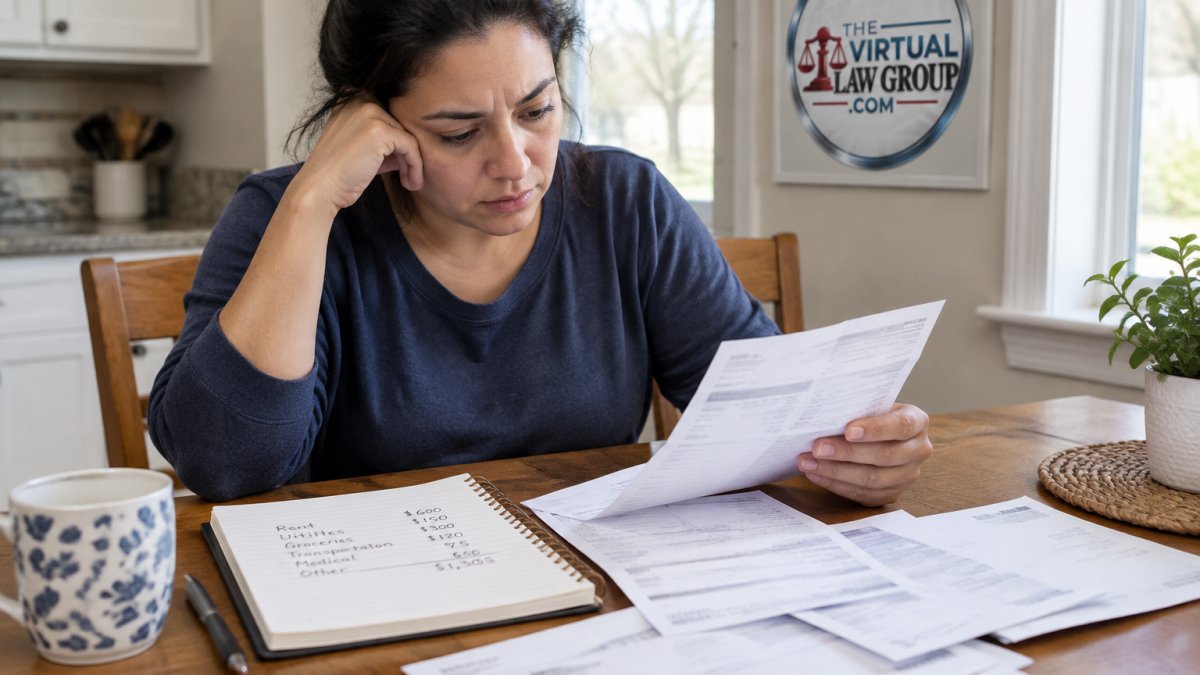
Start by listing your monthly income and every bill you owe. Then sort them into three groups:
- Essential: housing, utilities, food, transportation to work or medical care, and minimum debt payments
- Important but flexible: phone, internet, and some insurance premiums
- Nonessential: subscriptions, dining out, and discretionary shopping
Pay the essentials first. Then address the flexible items. Cut or pause the nonessential ones for now.
Watch out: Missing a payment on a secured debt like a car loan can lead to repossession. Contact the lender early if you expect to fall behind.
Lost Wages After an Accident: How to Document Your Losses
Lost income is one of the most significant financial losses after an accident. Good records make it easier to show what you lost.
Keep the following documents:
- Pay stubs from before the accident
- Letters from your employer confirming time missed
- Doctor's notes that explain work restrictions
- Records of any reduced hours or lost overtime
If you are self-employed, keep invoices, contracts, and bank statements that show your normal income before the accident.
How to Pay Medical Bills While Waiting for a Settlement
Medical bills can arrive long before a settlement is reached. Many providers will agree to a payment plan if you ask. Others may pause collections while a claim is pending, but this varies, so ask each provider directly.
Options to ask about include:
- Interest-free payment plans
- Reduced rates for prompt or partial payment
- Billing your health insurance, if you have it
- Medical payments coverage through an auto policy, if available
Consumer Financial Protection Bureau guidance on medical debt
Proof of Financial Hardship After an Accident
Courts and insurers may ask you to prove the financial effect of your injury. Keep organized copies of bank statements, bills, and notices of late payments. A simple written log of how the accident changed your daily finances can also help.
Lawsuit Loans for Personal Injury Claims: Risks and Alternatives
Some companies offer cash advances against a future settlement. These are sometimes called lawsuit loans. They can seem like a quick fix, but they carry real risks. Fees can grow quickly, and the amount you owe may be far more than you borrowed.
Alternatives to consider include:
- Asking providers for payment plans
- Speaking with a legal aid organization about financial assistance
- Checking eligibility for public benefits or crime victim compensation programs
Before accepting any advance, read the full agreement and ask how fees are calculated.
Scheduling Your Next Step: Getting a Claim Review Before Money Runs Out
If your finances are under strain, do not wait until the situation becomes urgent. A claim review can help you understand your options, including how to manage costs while your case is pending. The Virtual Law Group offers virtual consultations, including availability on weekends, nights, and holidays, so you can get answers on your schedule. We help clients with the legal details of recovery, from documenting losses to arranging rental cars and medical care. Contact The Virtual Law Group today to get started.
Frequently Asked Questions
What qualifies as financial hardship after an injury?
Financial hardship after an injury generally means you cannot cover essential costs such as rent or mortgage, utilities, food, transportation and medical bills because your income has dropped or your expenses have risen. Common signs include missed work, growing medical balances, dipping into savings or taking on new debt to stay current. There is no single legal definition that applies to every claim, so the strongest case comes from documenting specific, dated losses. A consultation with an attorney can help you determine which of your losses are recoverable in your situation.
What proof do I need to document financial hardship after an accident?
Keep pay stubs, employer letters confirming missed shifts, tax returns, and records of any lost overtime or bonuses. For medical costs, save itemized bills, explanation of benefits statements and receipts for prescriptions and travel to appointments. Track out-of-pocket expenses in a dated log and keep notices from creditors or collection agencies. Written communications with your insurer about delays or denials also matter. Organized records make it far easier to show the true financial impact of the accident.
Should I take out a lawsuit loan while waiting for an injury settlement?
Lawsuit loans, sometimes called pre-settlement funding, provide cash advances against a future settlement, but they are typically repaid from your recovery with fees that can grow quickly the longer a case takes. Because these products are not regulated the same way as traditional loans in every state, the terms vary widely and should be read carefully. Before borrowing, ask about the total repayment amount, how interest or fees accrue, and what happens if you lose the case. Speaking with an attorney about alternatives, such as payment arrangements with providers, is often worthwhile first.
Can I negotiate medical bills while my injury claim is pending?
Many providers will agree to a payment plan, reduced balance or deferred billing while a claim is open, especially if you tell them about the pending case and ask for a hold. Request an itemized bill, check it for errors, and ask whether your health insurance or the at-fault party's insurer will cover the charges. Put every agreement in writing and confirm the account status with the billing office.